
South Durban leaders launch community-led Just Transition process
The gathering marked the start of a broader engagement process aimed at ensuring communities are not passive observers of industrial and economic change, but active participants in determining the future of South Durban.
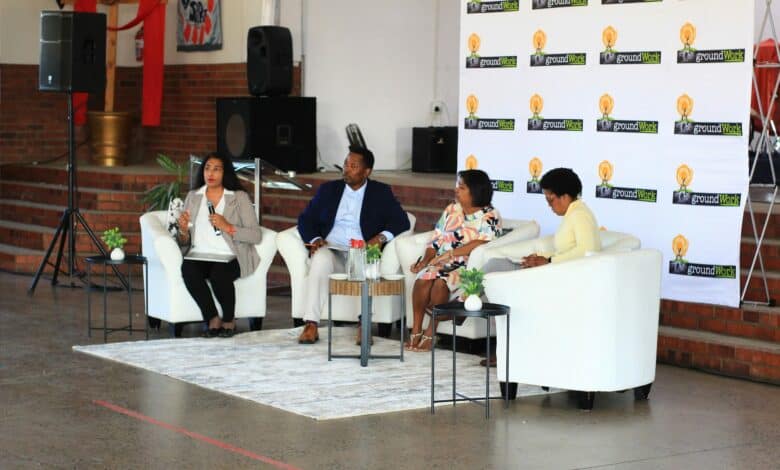
Community leaders, organised labour, civil society organisations, government officials, academics, and activists gathered in South Durban on June 2 to begin shaping a community-led vision for a Just Transition in one of South Africa’s most industrialised and environmentally burdened regions.
Hosted by groundWork at Gardenia Primary School Hall, the inaugural South Durban Just Transition leadership meeting brought together nearly 60 participants from Bluff, Wentworth, Merebank, Umlazi, and surrounding communities to explore how the transition to a low-carbon economy can deliver meaningful social, economic and environmental benefits for local residents.
The gathering marked the start of a broader engagement process aimed at ensuring communities are not passive observers of industrial and economic change, but active participants in determining the future of South Durban.
Discussions focused on climate resilience, local economic development, job creation, skills development, public participation and pathways for young people and workers in a changing economy.
Participants emphasised that a Just Transition must address both environmental challenges and longstanding social inequalities, particularly in communities that have carried the burden of industrial pollution and economic exclusion for decades.
Community Fathers Initiative representative, Darian Smith, highlighted the urgent need to prepare young people for emerging opportunities linked to the transition.
“Many young people are eager to participate in the economy but often lack access to the training, pathways and exposure needed to enter new and developing sectors,” he said.
Ranjan Deonath of the Merewest Community Foundation shared lessons from community-led disaster preparedness initiatives, including the development of emergency evacuation plans in response to growing climate-related risks.
ALSO READ: South Durban Community Environmental Alliance cleans up historic Mandela Stone site
Speaking during the panel discussion, Professor Rajen Naidoo of the University of KwaZulu-Natal stressed the importance of protecting community health while advancing climate action. “We need to move towards cleaner sources of energy because we need to protect the health of people in disadvantaged communities. At the same time, we should be encouraged by the level of organising and leadership emerging from our communities,” he said.
Dr Tashmica Sharma from UKZN noted that a Just Transition cannot focus solely on environmental goals.
“We have to protect the environment while also protecting livelihoods. A Just Transition requires us to address the broader social and economic realities that communities face,” she said.
Dr Luyanda Mafumbu, deputy head of the eThekwini Municipality’s Climate Change Department, reaffirmed the importance of collaboration between government and communities. “The transition cannot be driven by government alone. Communities must help shape the vision and the solutions,” he said.
Dr Jenitha Badul of the Department of Forestry, Fisheries and the Environment highlighted the importance of skills development, local planning and community-driven projects to ensure that future opportunities are accessible to those most affected by the transition.
Environmental activist, Tristan Meek from the South Durban Community Environmental Alliance, cautioned against approaches that fail to connect complex policy discussions to everyday realities. “Communities need to be included, informed and empowered to participate meaningfully. People must have the space to voice their own concerns and shape their own future,” he stated.
According to Yegeshni Moodley, climate and energy justice senior campaign manager at groundWork, the meeting represents an important milestone in building a shared vision for South Durban. “We want conversations about a Just Transition to move beyond policy spaces and become part of everyday community discussions. South Durban has the knowledge, leadership and experience needed to shape a just and inclusive future. The next step is turning dialogue into action,” she said.
groundWork confirmed that the leadership meeting is the first in a series of engagements planned across the South Durban Basin, including community town halls and sector-specific dialogues that will contribute to a locally driven Just Transition roadmap, building on the long history of environmental and social justice activism in South Durban.