Residents weigh in on municipality’s infrastructure revamp
The draft budget is subjectable to changes and will only come into effect in 2026.
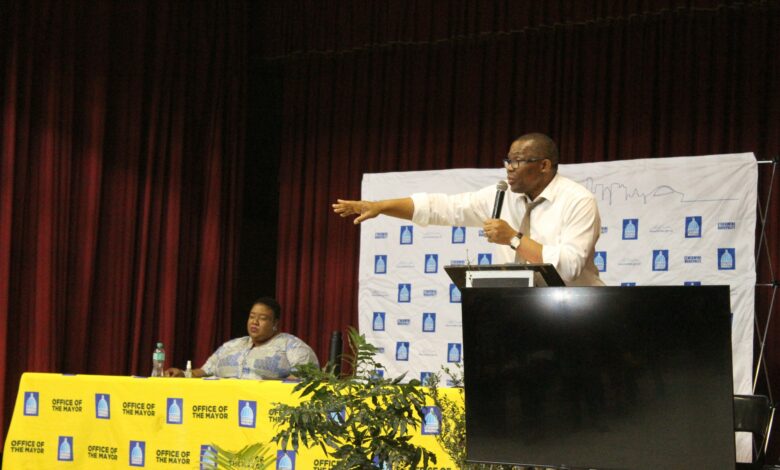
A recent Integrated Development Plan (IDP) session was held at Stonebridge Hall, where eThekwini Municipality officials, including mayor, Cllr Cyril Xaba and representatives from the Treasurer’s Office, addressed ongoing infrastructure issues, service delivery concerns, and budget allocations.
The session focused on current municipal challenges and strategic reforms aimed at improving responsiveness and accountability within the city’s key departments. Cllr Xaba highlighted pressing issues, such as the municipality’s call centre underperforming, noting its need for a complete upgrade to better serve residents.
He also introduced a major structural reform: water and sanitation will soon become a standalone entity, complete with its own fleet, human resources department, supply chain, and CEO – who will be directly accountable for the entity’s performance.
ALSO READ: Criticisms on tariff increases
Two other independent municipal entities are also in development, each headed by its own CEO and reporting directly to the city manager. These entities will raise and manage their own revenue, focusing on repairs, maintenance, and infrastructure investment.
Cllr Xaba shared that turnaround strategies for both electricity (approved in 2024) and water and sanitation (recently approved by National Treasury and Council) are already in motion.
He also stated that new strategies will be developed to address deeper, systemic issues plaguing these sectors. Technological interventions were also outlined, including plans to install sensors along aqueducts to detect leaks by monitoring water flow in real time.
This aims to reduce water loss and address outages more swiftly. Additionally, a broad metering rollout is planned – meters older than 15 years (or possibly five) will be replaced, and new meters will be installed in informal and rural settlements to ensure equitable monitoring and prevent over-billing or under-billing. The mayor urged residents to submit their meter readings through the eThekwini mobile app for accurate billing.
Plans to install and implement metering for rural and informal settlements are also underway to monitor how much water is afforded to these areas. Budget constraints were also discussed. Electricity remains the highest expenditure item for the municipality, followed closely by contracted services and water purchases from Umngeni-Uthukela Water.
Proposed tariff increases for water and electricity were rejected, though utility providers insist on cost-reflective pricing. The mayor expressed concern about the affordability of rising tariffs and stressed that reallocating funds to subsidise utilities would compromise service delivery in other areas.
Further challenges cited included ageing infrastructure, the impact of recent floods, rapid urbanisation, and revenue losses linked to electricity and water issues. Low-income households were encouraged to apply for indigent support plans to access relief. However, not all community members were satisfied with the municipality’s approach.
Vivian Pillay, a local resident, voiced his frustration in a statement, saying, “I disagree with the mayor who said this was not a rubber-stamping process. The eThekwini Municipality does not take the views of Phoenix seriously because of the lack of consultation and consensus with ratepayers – mainly due to the Phoenix councillors failing to engage with their constituents.”
ALSO READ: City and Umhlanga ratepayers work together to address service delivery challenges
Pillay also criticised the municipality’s vision for a ‘high quality of life with equal opportunities’, arguing that residents of Phoenix are unfairly burdened.
He said, “The poor people of Phoenix are subsidising informal settlements and rural areas who receive free lights, water, and rates. Since 1994, there has been no infrastructure development in Phoenix. We are the second-largest township in South Africa, yet we don’t have a sports stadium like other areas. There is no mention of future infrastructure projects for Phoenix.”
He concluded by accusing local councillors of remaining silent. “The people of Phoenix are being systematically deprived of service delivery because our councillors are too afraid to bite the hands that feed them,” he said.
The draft budget is subjectable to changes and will only come into effect in 2026. Residents can view copies of the Draft Budget and Draft IDP online at www.durban.gov.za, at Sizakala Centres, or at local libraries. Residents who were not available for the IDP session are urged to submit their inputs or comments online by emailing [email protected] or dropped off at Sizakala Centres and libraries.