Adopt-a-School Foundation’s Whole School Development model achieves academic excellence
Since 2012, Bizimali Secondary School, along with 20 high schools around South Africa, has been adopted by the Industrial Development Corporation (IDC).
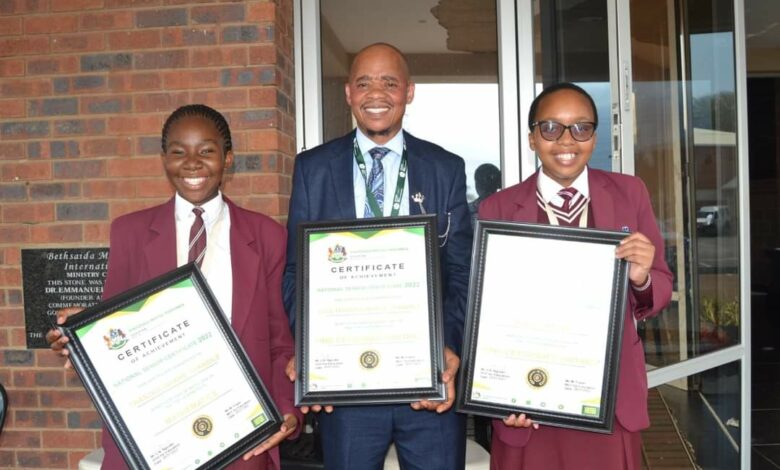
In just one decade, Adopt-a-School Foundation, a partner entity of the Cyril Ramaphosa Foundation through funding support from the Industrial Development Corporation, has seen the transformation of Bizimali Secondary School in KwaZulu-Natal, to a school of excellence, through the implementation of its Whole School Development (WSD) model.
Adopt-a-School Foundation is a registered non-profit organisation.
The foundation’s vision is to create a dynamic, transformed, and accessible schooling environment that produces capable global citizens to meet the developmental needs of Southern Africa.
Adopt-a-School Foundation celebrated its 20th anniversary in 2022, with a proven track record of demonstrable impact in educational development.
The foundation’s Whole School Development model goes beyond academic programmes. It addresses basic infrastructure, social influences, curriculum development, and school leadership and helped deliver quality schooling to 643 underprivileged schools across the county through meaningful partnerships and collaboration.
Since 2012, Bizimali Secondary School, along with 20 high schools around South Africa, has been adopted by the Industrial Development Corporation (IDC).
Located in rural Kranskop, in Nkandla, KwaZulu-Natal, the school is surrounded by an impoverished community with very high levels of unemployment.
Over the years, as the WSD implementation took hold, Bizimali, established in 1983 by Chief Bizimali has grown into a beacon of hope that provides high-quality education and promotes a strong sense of community with alumni often returning to work in local schools and clinics and to open businesses.
The school caters to grades eight to 12. Under the stewardship of the principal, Mr NZ Ntuli, Bizimali has 1, 850 learners, an active school governing body (SGB) and a school management team (SMT) made up of the principal, two deputies, and five heads of department (HODs), who run the operation.
There are 67 teachers and 12 assistant teachers. In addition, there is 16 non-teaching staff, including a security guard, administrator, five general assistants, and nine kitchen staff, who run the school’s nutrition programme.
Since its inception, Bizimali has had an excellent academic history and has always been committed to building partnerships for the betterment of the school. In 1998, 16 new classrooms were donated, and a year later, President Nelson Mandela supported a fundraising campaign to build two more classrooms.
In 2013, a collaborative partnership between Adopt-a-School Foundation and the Industrial Development Corporation (IDC) began and invested in this remarkable school, leading to its transformation.
In 2012, after an initial needs analysis, a strategic plan was implemented focusing on leadership development and governance. The following year, 16 classrooms were renovated.
This was followed in 2014 with educator development and classroom support programmes. The pit latrines were converted into safe ablution facilities.
A borehole was constructed, and solar panels were fitted the following year. In 2016, critical mathematics and physical learner supplementary programmes were introduced, with the initial ICT programme implemented the following year.
This needed the resourcing and placement of an Information Technology Entrepreneur (ITE) at the school. Phase two began in 2020, the same year new classroom furniture was bought for 12 classrooms to meet COVID-19 requirements. In 2021, a new dining and nutrition centre was built.
Adopt-a-School Foundation chief executive officer, Steven Lebere said, “Our WSD is a robust and holistic model that has supported Bizimali Secondary School in leadership development, curriculum support, and infrastructure development. Further, it has helped the school to address social welfare challenges. The school has proudly committed to and sustained these interventions, contributing to its becoming a healthy and safe environment.”