Seven-year-old cancer survivor surpasses 100-day post-transplant milestone
When a child is diagnosed with blood cancer or a blood disorder, their family is thrown into a world of fear and uncertainty. But stories like Avukile’s prove that behind every transplant is a chain of heroes - the doctors, the families, and ordinary South Africans who register as donors.
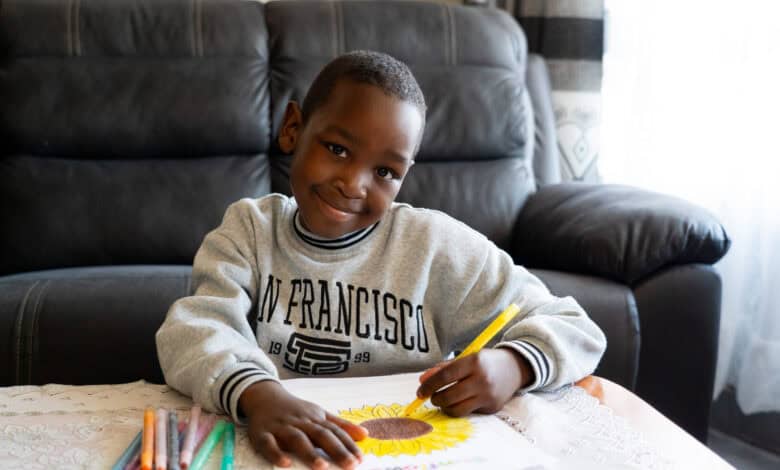
Just over three months ago, seven-year-old Avukile from Estcourt, KwaZulu-Natal, was fighting for his life. Diagnosed with Acute Lymphoblastic Leukaemia (ALL), an aggressive cancer of the blood and bone marrow, a stem-cell transplant was the only way to restore normal blood production and give him a fighting chance at recovery.
Today, thanks to a selfless donor, he has passed the critical 100-day mark – a major milestone on the road to recovery. Before his diagnosis, Avukile was an active child who loved playing with toy cars with his friends, their laughter filling the air.
It was the shift from boundless energy to constant fatigue that first signalled something was wrong back in June 2023. The tiredness persisted, and then came the loss of appetite.
Seeking answers, his mother, Thobile, took him to a local medical professional, where an injection and pills seemed to help temporarily, but the symptoms always returned. Then, Avukile began flinching when touched on his stomach during bath time. With the help of a neighbour, he was rushed to the nearest hospital. A CT scan revealed internal boils, and although antibiotics were prescribed, there was sadly no sign of improvement.
Although he was later discharged, the exhaustion returned in early 2024. This time, doctors transferred him to another hospital for further tests. That’s when Avukile received the ALL diagnosis and Thobile was told her son needed a stem-cell transplant from a matching donor.
“A few months later, I got a call from the doctors saying they had found a match. But the excitement quickly turned to disappointment. They said the donor could only donate in two or three years’ time due to unforeseen circumstances. I was devastated,” Thobile said.
Seeing her child endure months of chemotherapy was heartbreaking. But then, in February this year, another call came – this time with good news. A new donor had been found, and they were ready to donate. “Everything moved so fast,” she says.
Head of community engagement and communication at DKMS Africa, Palesa Mokomele, explained that the first 100 days post-transplant are the most high-risk.
“It’s after a transplant that patients are most vulnerable to complications such as infection and graft-versus-host disease, which occurs when the new cells from the donor mistake the patient’s body for something harmful and begin attacking it. Surpassing day 100 signals that the transplant has been accepted by the body and that the child is entering a much more stable phase of healing,” she said.
ALSO READ: DKMS launches schools awareness programme in KwaZulu-Natal
There is more encouraging news for other families with children diagnosed with blood cancer or blood disorders. A decade-long study found that 89 percent of children who received matched-donor transplants survived their procedures. While individual outcomes vary, the data offers hope.
One donor. One life saved!
Avukile’s story highlights the life-changing impact of donor registration.
“In South Africa, blood cancers represent 33 percent of all childhood cancer cases, affecting over 1, 400 children annually. Many of these young patients, along with others suffering from blood disorders, will require a stem-cell transplant to survive. This is because their disease disrupts the production and function of blood cells, making stem-cell donation a potentially lifesaving option, particularly for those who don’t respond fully to conventional treatments like radiotherapy or chemotherapy, or who have relapsed after prior therapy. However, finding a matching stem cell donor can take months, sometimes even years, and unfortunately, some patients may never find a suitable match at all,” Mokomele added.
Although a patient’s relatives are the first to be considered as potential donors, only about 30 percent find a related match. When a related match can’t be found, the search then shifts to unrelated donors on the local stem-cell registry.
However, Mokomele highlights a major challenge. “Our national donor registry does not yet reflect the full diversity of our population. With over 17, 000 known tissue types that combine in millions of ways across different ethnic groups, patients of Black, Coloured, and Asian descent face especially slim chances of finding a match. This is why every new person who registers significantly improves the odds of saving a life,” she continued.
For Avukile, finding that one-in-125, 000 match has meant the difference between life and death. Now, he can return to playing with his friends, where he belongs. Expressing her gratitude to the donor, Thobile says, “The Lord must bless them and their family. May their wishes be granted. They must continue encouraging others to donate and show how impactful it is to help children like my son.”
When a child is diagnosed with blood cancer or a blood disorder, their family is thrown into a world of fear and uncertainty. “But stories like Avukile’s prove that behind every transplant is a chain of heroes – the doctors, the families, and ordinary South Africans who register as donors. One person’s decision has given this child a second chance at life. We need more people to realise they hold the same power,” concluded Mokomele.
Register today at https://www.dkms-africa.org/register-now