Phoenix community demands accountability over neglect of local health facilities
Community activist, Pravin Arjoon presented damning testimony, backed by letters to health officials and his own experiences, detailing widespread bribery and abuse.
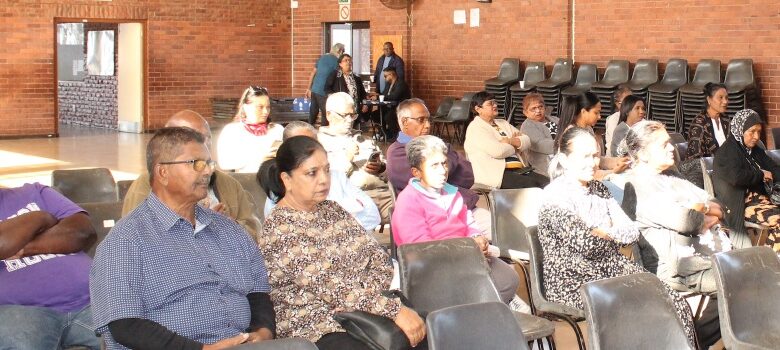
A storm of frustration, grief, and desperate pleas for accountability filled the Redfern Community Hall on Saturday, July 26, as Phoenix residents gathered to share harrowing experiences of neglect and corruption at the Phoenix Community Health Centre (PCHC, unit 10 clinic) and the Mahatma Gandhi Memorial Hospital (MGMH).
The emotionally charged meeting, hosted by DA councillor, Samier Singh, was attended by Dr Imraan Keeka, KZN Health Portfolio Committee chairperson, offering residents a rare opportunity to confront a key figure responsible for healthcare oversight. Residents accused the two health facilities of gross negligence, systemic corruption, and human rights violations.
Community activist, Pravin Arjoon presented damning testimony, backed by letters to health officials and his own experiences, detailing widespread bribery and abuse. He described the facilities as ‘shabby and shocking’ and accused staff of being complicit in the exploitation of vulnerable patients.
ALSO READ: HPCSA probes doctor over alleged unnecessary surgeries
Arjoon claimed patients are often forced to pay bribes to receive basic care, including access to files, doctors, and medication. At MGMH, touts allegedly collect R150 per patient to bypass queues, while at PCHC, patients reportedly pay R20 or R50 to receive faster service.
Arjoon recounted an incident from March 2025 when he sought urgent care at PCHC after being told his blood pressure was dangerously high. He waited for hours without assistance while nurses idled, and when he began filming the conditions, security guards detained him, forced him to delete the footage, and later denied him entry.
Only after escalating the matter to the clinic’s public relations officer did he receive care. Arjoon’s experience, he said, reflects a broader crisis where patients must expose abuse to receive mandated services.
The meeting revealed a distressing pattern of mistreatment. Elderly patients, pregnant women, and children are frequently bullied by security, shouted at by staff, and made to wait for hours, sometimes days, without treatment. Residents claimed that in some cases, loved ones had died due to delays.
Security guards were accused of acting as gatekeepers, involved in bribery schemes, and intimidating those who spoke out. Nurses were described as rude and indifferent, often walking around aimlessly. Doctors were criticised for arriving late and failing to manage patient loads efficiently.
Arjoon added that the public relations system is dysfunctional, while the PCHC PRO was responsive, the MGMH PRO was reportedly absent and dismissive. Another issue raised was the lack of functional parking at MGMH. Patients are forced to park outside the hospital, risking theft, while internal parking remains inaccessible.
Dr Imraan Keeka responded to the allegations, acknowledging that PCHC is severely understaffed, contributing to long wait times and poor service. He revealed that the provincial health department is financially constrained and unable to hire more doctors.
A nationwide shortage of insulin pens was also highlighted. These pens enable diabetic patients to correctly dose insulin, but with their scarcity, patients are using syringes and vials, risking under-dosing or overdosing and reusing syringes, leading to infections. Medicine is being rationed among facilities, which is why patients are not receiving full prescriptions.
Keeka pointed to deeper structural issues, noting that when the Government of Provincial Unity took control last year, the province inherited a R9 billion deficit. He attributed this deficit to reckless spending by former MECs, nepotism, and the squandering of funds. He further revealed that the Department of Health hired 7, 000 unskilled workers during COVID-19, who were retained post-pandemic.
Despite this, many clinics remain understaffed, raising suspicions about ‘ghost employees’, non-existent people listed on the municipality’s payroll, diverting resources. Although the deficit has been reduced to R1 billion, funding remains inadequate. Keeka also noted that metro municipalities should not be managing clinics, a responsibility that should fall on the provincial or national government.
ALSO READ: Patient lament of ‘unhygienic’ conditions at clinic
However, financial limitations prevent the state from taking over these clinics. Residents of Phoenix are demanding immediate intervention. They are calling for upgrades to crumbling infrastructure, accountability for corruption, service-level contracts for security and medical staff, and greater transparency in staffing and resource allocation.
The message from the community was clear: they refuse to accept a health system where care must be bought, and where the vulnerable are left to suffer or die in silence. Healthcare, they insist, is a constitutional right, not a privilege.