‘It takes a village’: MEC rallies Ennerdale community to reclaim schools, safety and youth development
The latest engagement, held at Mid-Ennerdale Primary School on Friday, June 12, forms part of a province-wide series of approximately 45 community dialogues led by the MEC. Now in its 22nd session, the initiative is aimed at directly bringing together government, schools, parents, learners, and civil society to co-design solutions affecting education and youth development.
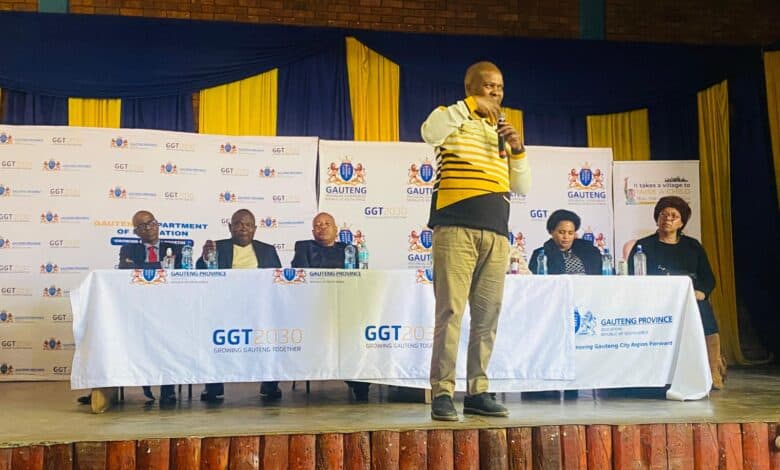
The Gauteng MEC for Education, Sport, Arts, Culture and Recreation, Lebogang Maile, has intensified calls for collective responsibility in tackling the province’s deepening education and social challenges, as he continues with his flagship: ‘It takes a village to raise a child’ community engagement programme.
The latest engagement, held at Mid-Ennerdale Primary School on Friday, June 12, forms part of a province-wide series of approximately 45 community dialogues led by the MEC.
Now in its 22nd session, the initiative is aimed at directly bringing together government, schools, parents, pupils, and civil society to co-design solutions affecting education and youth development.
Described by MEC Maile as one of the most attended engagements so far, the Ennerdale session reflected both the urgency of community concerns and the demand for stronger intervention in local schools.
The programme is positioned as more than a consultation platform. It is part of a broader provincial strategy to reposition schools as centres of safety, learning, culture, and social cohesion, rather than institutions isolated from their surrounding communities.
Under the initiative, the Gauteng Department of Education and the Gauteng Department of Sport, Arts, Culture and Recreation have been working to strengthen partnerships with communities, recognising that many of the challenges facing learners extend beyond the classroom.
ALSO READ: Adopt-a-School Foundation’s after-school art programme empowers young minds
These include issues such as gangsterism, bullying, violence, substance abuse, and lack of parental involvement – concerns that were again strongly raised by residents during the Ennerdale engagement.
Speaking at the session, MEC Maile reiterated that the government alone cannot solve the complex social issues affecting schools.
“Sport, Arts, Culture and Recreation is not run by the government, but it is run by communities. They must organise themselves. Government also has a responsibility to facilitate, coordinate, create a conducive environment and make resources available,” he told the Lenasia Rising Sun.
The MEC emphasised that the programme is designed to shift education from being seen as a purely institutional responsibility to a shared societal duty – where parents, faith-based organisations, local leaders, and youth structures play an active role.
He also acknowledged the persistent frustration around limited resources, noting that while the government remains committed to addressing community concerns, financial and infrastructural constraints continue to affect the pace of delivery.
Beyond consultation, the programme is increasingly being framed as a mechanism for early intervention and prevention. By engaging communities directly, the provincial government aims to identify risks before they escalate – particularly in relation to school safety, dropout rates, and youth vulnerability.
A key focus area is the use of sport, arts, and cultural programmes as tools for social development. These are seen as critical interventions to keep young people engaged, build discipline, and create pathways away from crime and gangsterism. “A child in sport is a child out of court,” highlighted one of the attendees at the Ennerdale session.
The initiative also highlights early childhood development (ECD) as a foundation for long-term educational success, with calls for improved support systems in under-resourced communities.
Community members at the engagement raised a wide range of concerns, including deteriorating school infrastructure, learner discipline issues, and the growing impact of gang-related activity in and around schools.
Many participants called for stronger collaboration between schools, law enforcement, and community structures to ensure safer learning environments.
As the programme continues across Gauteng, it is increasingly being positioned as a long-term social compact between government and communities – one that seeks to restore accountability, rebuild trust, and strengthen the role of schools as anchors of community stability.
For Ennerdale and surrounding residents, the engagement marked another opportunity to be heard. For the government, it was another step in a broader attempt to turn dialogue into measurable change in classrooms, streets, and homes across the province.