Lehae residents protest eight months without power as winter bites
The demonstration comes as winter approaches, a season where electricity becomes even more essential for households already grappling with cold temperatures, crime, and daily living challenges.
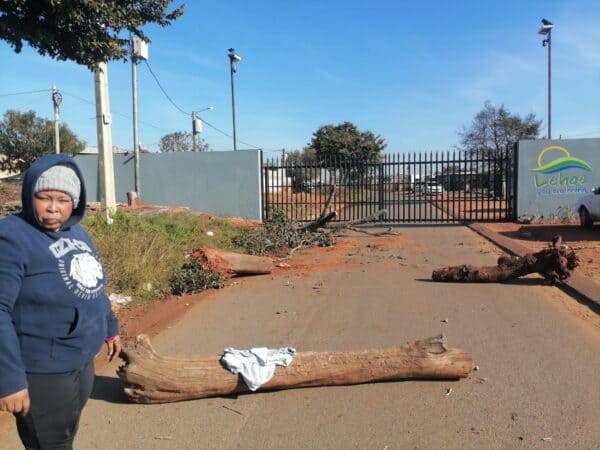
Frustrated residents of Lehae ward 122 took to the streets on Wednesday, May 27, demanding answers over prolonged electricity outages caused by damaged transformers that have allegedly left parts of the community without power for up to eight months.
The peaceful protest saw residents block the intersection of the Golden Highway and Nirvana Drive, and a key entry and exit point into Lehae, during the early hours of the morning.
Protesters, however, allowed school pupils and teachers to pass through.
ALSO READ: Neglected areas spark outcry in eThekwini communities
The demonstration comes as winter approaches, a season where electricity becomes even more essential for households already grappling with cold temperatures, crime, and daily living challenges.
“We as the community did everything to comply so that our houses can be electrified again,” said community leader, Nicole Monyamani during the protest.
Residents claim they have endured months of broken promises and shifting requirements from authorities.
“They said we must register for the ESP, which we did. Then they requested that we contribute R200 per household, and that was also done, but we remained with no transformers,” cried residents gathered at the protest.
Beyond the inconvenience of darkness, residents say the outages have severely impacted daily life. Parents fear for their children’s education as June examinations approach, while others worry about safety in a crime-ridden area and the inability to refrigerate medication for chronic illnesses.
Monyamani said community representatives have visited City Power offices more than 10 times without receiving a lasting solution.
“We have been patient for far too long, and it is indeed worrying that our people are left to suffer in this way,” added ward councillor, Sithembiso Zungu, who is also the member of the Mayoral Committee for group corporate and shared services of the City of Johannesburg.
Cllr Zungu revealed that on Tuesday, May 26, the City of Johannesburg secured a loan intended to assist City Power in addressing infrastructure challenges, including the procurement of transformers and repairs to the electricity network.
However, City Power says the situation is more complex than simply replacing damaged transformers.
According to City Power spokesperson, Isaac Mangena, four pole-mounted transformers in the area were affected, with two already replaced and energised earlier this year.
The remaining two transformers were reportedly damaged in March 2026.
Mangena said the utility has held several engagements with the community and councillors over ongoing electricity challenges, including repeated transformer failures, illegal electricity connections, electricity theft, and network overloading.
“City Power has identified significant challenges in the area relating to illegal electricity connections and the unlawful resale of electricity to third parties. In many instances, property owners illegally connect informal structures or unproclaimed backyard dwellings to their supply and charge tenants directly for electricity consumption. These activities are unlawful, contribute to network overloading and repeated transformer failures, and may result in criminal charges against those involved,” Mangena said.
He added that resistance to the utility’s ‘normalisation process’ has also delayed progress in some instances.
Mangena explained that normalisation is aimed at formalising electricity supply in areas affected by illegal connections and unsafe infrastructure.
The process includes the installation of legal prepaid meters, upgrading damaged infrastructure, and replacing unsafe connections to stabilise the electricity network.
“Currently, City Power teams are conducting a normalisation process with customers affected by the two outstanding transformers. One of these transformers has already been replaced and will be energised once the normalisation process is completed. The second transformer is in the process of being procured from service providers,” he said.
According to City Power, once the community reaches the required 80% compliance threshold, prepaid meters will be installed for residents who have made payments towards the process.
Mangena further clarified that residents undergoing normalisation are required to pay R500, of which R200 covers service-related charges, while the remainder is credited back in electricity units once installation is complete.
ALSO READ: Furious residents flood Durban CBD in protest against eThekwini tariff hikes
Residents registered under the Expanded Social Package (ESP) programme pay a reduced amount of R200.
He said the reduced payment arrangement is intended to help non-vending and low-income communities transition into the formal electricity system.
“Customers found to have bypassed electricity connections are ordinarily liable for a prescribed penalty fee exceeding R14, 000. However, the current reduced payment arrangement is an intervention aimed at encouraging compliance and onboarding as many previously non-vending customers as possible into the legal electricity network,” added Mangena.
City Power has appealed for calm and cooperation from residents while the process continues.
The protest once again raises questions around communication and accountability between service delivery entities and communities, as frustrated residents argue they are often only heard after taking to the streets.