Public protests a cause for concern says MEC
Over the past four months over 270 illegal protests have been reported in the province. What makes matters worse is that the majority of these protests become violent and result in malicious damage to private and public property.
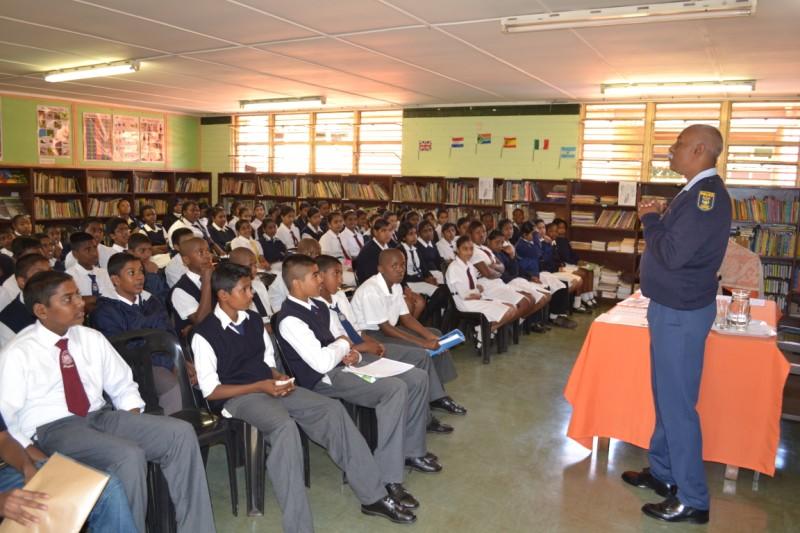
MEDIA STATEMENT BY THE KWAZULU-NATAL MEC FOR TRANSPORT, COMMUNITY SAFETY AND LIAISON, MXOLISI KAUNDA AT THE INTEGRATED LAW ENFORCEMENT MEETING FOR PUBLIC PROTESTS IN DURBAN, 24 JULY 2018
Ladies and Gentlemen of the media
Thank you very much for making time to attend this media briefing. Today (July 24), we convened an integrated law enforcement meeting to devise a plan that will see us eliminating illegal and violent public protests that we have seen mushrooming across the province in the recent past.
Our province has been engulfed with public protests which have not only been illegal but also violent. These do not only cause harm to the image of our province but it also places the lives of people and property in danger.
The recent increase in public protests in our province is a cause for concern and needs to be rejected if we are to build a truly democratic society, governed by the rule of law.
Ladies and Gentlemen, police reports indicate that in the previous financial year, KwaZulu-Natal recorded more than 530 public protests.
Over the past four months over 270 illegal protests have been reported in the province. What makes matters worse is that the majority of these protests become violent and result in malicious damage to private and public property.
More disturbing are the recent trends, where we have seen the blockading of national roads, including N3 free-way on four occasions in Mooi River, Van Reenen Pass and Pietermaritzburg.
This was accompanied by the damaging and looting of 18 trucks. Last month, we also saw the shutdown of the N2 major arterial route between the towns of Mtubatuba and Hluhluwe, burning of a library and road infrastructure in iXopo in the Harry Gwala District Municipality.
We must remind members of the public that when you block N2 or N3 you are not only harming KwaZulu-Natal or South Africa – but you are harming the entire Southern African region, because through the port of Durban and Richards Bay, they are beneficiaries of the movements of goods which are key to their growth and economic development.
We must remind our people that Section 17 of Chapter 2 of the Constitution provides that ‘Everyone has the right, peacefully and unarmed, to assemble, to demonstrate, to picket and to present petitions.’ The exercise of this right is regulated by the Gatherings Act of 1993.
Any demonstration not complying with this Act is therefore unlawful. Unfortunately, the majority of protests in the province do not adhere to the provisions of this Act in one or more way and have adverse repercussions for our communities, commuters and economy. It is therefore important for us to manage such protests appropriately and in accordance with the law.
We want to therefore declare a war on these illegal protests. As the provincial government, we are saying that individuals who are implicated in these illegal protests in our communities must face the full might of the law. Any person who blocks roads or conducts any criminal act will be charged and prosecuted. This anarchy must now come to an end!
These illegal protests have also resulted in an unnecessary confrontation between the police and the communities. We again wish to remind people that, police have a duty to protect every right in the constitution, including the right of those who are not part of the protests.
In a province such as ours where there is still pockets of killings, police are forced to divert their focus and attention, leave criminals roaming our streets to focus on people who are protesting.
We call upon the protest organisers to ensure that they use the established government platforms of engagement provided by our Constitution and laws to raise their concerns on issues relating to service delivery.
The Provincial Executive Council under the leadership of Premier Willies Mchunu has established a sub-committee on public protests that is tasked with devising a strategy that will deal with public protests
The subcommittee includes:
MEC for Transport, Community Safety and Liaison, Mxolisi Kaunda (Chairperson)
MEC for Human Settlements and Public Works, Ravi Pillay
MEC for Corporate Governance and Traditional Affairs, Nomusa Dube-Ncube
MEC for Education Mthandeni Dlungwane
The provincial government has given this sub-committee three months to eradicate illegal protests. Anyone who wants to embark on a protest must follow correct legal processes or otherwise face the full might of the law.
This subcommittee has already identified flashpoints for public protests in the province where law enforcement will be heightened as part of our plans. The flash points include
- EThekwini Metro-which include Informal settlements such as Cato Manor, Chesterville, M19, Bottlebrush, Umlazi, Inanda, KwaMashu, Ntuzuma (INK). In these areas, communities are complaining mainly about service delivery.
- Disruptions, extortionist practices by business forums, including inciting labour unrest at construction sites, factories, Port of Durban, Engen and Sapref.
- In Ilembe District, there have been service delivery protests in KwaDukuza Groutville, Etete, and Mandeni in sithebe Industrial Area where two factories were burnt.
- In UMkhanyakude- we have a huge challenge of cross-border crime where cars are stolen and taken across the Mozambique border
- In King Cetshwayo, particularly in Umfolozi and uMhlathuze we have seen a resurgence of disruptions of major companies such as RBM through labour unrest and invasion of construction sites, factories and Port of Richards Bay by business forums
- In UGu District, particularly in Ray Nkonyeni and Umdoni municipalities, we have experienced service delivery protests emanating from water shortages.
- We are keeping a close eye on anti-foreigner sentiments emanating from competition for scarce resources, employment and business opportunities in the Inanda, KwaMashu, Ntuzuma, Chesterville, Pietermaritzburg, Port Shepstone and New Hanova.
- Umsinga has become another hot spot after members of the community decided to embark on an illegal protests against the operations which are being conducted by the police in the area to tackle crime
We have extended the invite to all mayors of areas that we have identified as hotspots so that we all commit ourselves and give support to the integrated law enforcement plan that we will be rolling out in these flashpoints. In addition, we will also run a massive communication campaign to educate our citizens on channels to follow when wanting to protests. The campaign will also include responding to citizens grievances on issues relating to service delivery and provide feedback on stalled projects.
A key product of the work of the Committee is the Provincial Intergovernmental Relations Protocol on Public Protest Management approved by the Executive Council on 11 April 2018. This protocol is binding to all spheres and agencies of government to work together and respond rapidly to challenges that might result to public protests. Our strategy is to proactively intervene in areas with potential threats. This is a clear commitment on the part of the Provincial Government to enforce the law as a collective in respect of any unlawful protest activity.
Ladies and Gentlemen, any unlawful protest activity could result in prosecution for any one or more of the following offences:
- Contravention of section 4 of the Control of Access to Public Premises and Vehicles Act, 1985 which may upon conviction lead to liability of a fine not exceeding R2,000.00 or to imprisonment for a period not exceeding two years.
- Contravention of the section 12(1) of the Regulation of Gatherings Act, 1993 which may upon conviction lead to a liability of a fine or imprisonment for a period up to three years;
- Contravention of section 17 or 18 of the Riotous Assemblies Act, 1956 which may upon conviction lead to liability of a fine or imprisonment;
- Contravention of section 1 of the Trespass Act, 1959 which may upon conviction lead to liability of a fine not exceeding R2,000.00 or to imprisonment for a period not exceeding two years;
- Contravention of section 3(1) of the Dangerous Weapons Act, 2013 which may upon conviction lead to liability of a fine or imprisonment for a period not exceeding three years;
- Contravention of section 3 of the Criminal Matters Amendment Act, 2015 for damage to essential infrastructure which may upon conviction lead to liability of imprisonment not exceeding 30 years or, in the case of a corporate body, a fine not exceeding R100 million;
- Contravention of Regulation 319 of the National Road Traffic Regulations 2000 for hindering or endangering traffic on a public road which may upon conviction lead to liability of a fine or imprisonment for a period not exceeding one year; and/or
- Assault, malicious damage to property, attempted murder, murder, public violence or sedition (defying the authority of the state).
Having a criminal record in many instances presents a hurdle to finding or keeping employment, qualifying for certain licences (for example public transport operating licences) or qualifying to hold certain positions. In terms of section 162(5)(e) of the Companies Act, 2008 a court must make an order declaring a person to be a delinquent director if the person has, whilst a director, at least twice been personally convicted of an offence, or subjected to an administrative fine or similar penalty, in terms of any legislation. This would include the legislation referred to above.
In addition to the criminal sanctions referred to above, Departments may also institute civil proceedings against unlawful protestors in the form of applying for interdicts against protestors. Interdicts granted may include cost orders against the leaders of the protestors. This was done successfully in Weenen and will be implemented across the province.
Other possible civil action includes the issuing of summons in order to recover damages suffered. In terms of section 11 of the Regulation of Gatherings Act, if any riot damage occurs as a result of a gathering, every organization responsible for the gathering, or any convener, shall be jointly and severally liable for that riot damage as a joint wrongdoer, together with any other person who unlawfully caused or contributed to such riot damage.
As the provincial government, we completely reject these acts of criminality as they put the province right into an abyss of lawlessness. Road blockades and disruption of factories, clinics and schools send a negative image about our province which affects investment.
They send a message to the world that KwaZulu-Natal does not need development and progress because any investment coming through into the province will be a source of conflict. Last week, we dealt with a similar matter in Richards Bay, where Richards Bay Minerals (RBM) management were threatening to pull massive investment and redirect it to another country. Led by the Premier, we managed to resolve that challenge.
We are also not pleased in some cases about the conduct of the police in some of these illegal protests. They have been complicit to these illegal actions by not being decisive on people who are unleashing a reign of terror to innocent members of the public. We fully understand that as the police, you will not be able to carry out this responsibility alone. The plan however presented by the police management in our meeting today is convincing and we are satisfied, that if implemented accordingly, we will drastically reduce illegal and violent public protests.
Therefore, government, traditional leaders and crime-fighting structures in various communities, have committed to work closely to bring law and order in our communities.
In conclusion, we are aware that as election campaigns are entering a heightened phase, some people plan to use illegal protests as point scoring exercise. We want to reiterate that this must be done in accordance with the law. We also discourage political parties from using genuine public issues and turn them through public protest and further cause disruptions in the society.
Over the next three months, the provincial government, political leaders and local government will be embarking on a programme to engage communities who have raised concerned with regards to issues of service delivery. This work will be accompanied by the plan unveiled by the police, working with other security agencies, which will ensure that KwaZulu-Natal is a safe and stable province.
Thank you
Thank you very much for making time to attend this media briefing. Today, we convened an integrated law enforcement meeting to devise a plan that will see us eliminating illegal and violent public protests that we have seen mushrooming across the province in the recent past.
Our province has been engulfed with public protests which have not only been illegal but also violent. These do not only cause harm to the image of our province but it also places the lives of people and property in danger.
The recent increase in public protests in our province is a cause for concern and needs to be rejected if we are to build a truly democratic society, governed by the rule of law.
Ladies and Gentlemen, police reports indicate that in the previous financial year, KwaZulu-Natal recorded more than 530 public protests.
Over the past four months over 270 illegal protests have been reported in the province. What makes matters worse is that the majority of these protests become violent and result in malicious damage to private and public property.
More disturbing are the recent trends, where we have seen the blockading of national roads, including N3 free-way on four occasions in Mooi River, Van Reenen Pass and Pietermaritzburg.
This was accompanied by the damaging and looting of 18 trucks. Last month, we also saw the shutdown of the N2 major arterial route between the towns of Mtubatuba and Hluhluwe, burning of a library and road infrastructure in iXopo in the Harry Gwala District Municipality.
We must remind members of the public that when you block N2 or N3 you are not only harming KwaZulu-Natal or South Africa – but you are harming the entire Southern African region, because through the port of Durban and Richards Bay, they are beneficiaries of the movements of goods which are key to their growth and economic development.
We must remind our people that Section 17 of Chapter 2 of the Constitution provides that ‘Everyone has the right, peacefully and unarmed, to assemble, to demonstrate, to picket and to present petitions.’ The exercise of this right is regulated by the Gatherings Act of 1993.
Any demonstration not complying with this Act is therefore unlawful. Unfortunately, the majority of protests in the province do not adhere to the provisions of this Act in one or more way and have adverse repercussions for our communities, commuters and economy. It is therefore important for us to manage such protests appropriately and in accordance with the law.
We want to therefore declare a war on these illegal protests. As the provincial government, we are saying that individuals who are implicated in these illegal protests in our communities must face the full might of the law. Any person who blocks roads or conducts any criminal act will be charged and prosecuted. This anarchy must now come to an end!
These illegal protests have also resulted in an unnecessary confrontation between the police and the communities. We again wish to remind people that, police have a duty to protect every right in the constitution, including the right of those who are not part of the protests.
In a province such as ours where there is still pockets of killings, police are forced to divert their focus and attention, leave criminals roaming our streets to focus on people who are protesting.
We call upon the protest organisers to ensure that they use the established government platforms of engagement provided by our Constitution and laws to raise their concerns on issues relating to service delivery.
The Provincial Executive Council under the leadership of Premier Willies Mchunu has established a sub-committee on public protests that is tasked with devising a strategy that will deal with public protests
The subcommittee includes:
MEC for Transport, Community Safety and Liaison, Mxolisi Kaunda (Chairperson)
MEC for Human Settlements and Public Works, Ravi Pillay
MEC for Corporate Governance and Traditional Affairs, Nomusa Dube-Ncube
MEC for Education Mthandeni Dlungwane
The provincial government has given this sub-committee three months to eradicate illegal protests. Anyone who wants to embark on a protest must follow correct legal processes or otherwise face the full might of the law.
This subcommittee has already identified flashpoints for public protests in the province where law enforcement will be heightened as part of our plans. The flash points include
- EThekwini Metro-which include Informal settlements such as Cato Manor, Chesterville, M19, Bottlebrush, Umlazi, Inanda, KwaMashu, Ntuzuma (INK). In these areas, communities are complaining mainly about service delivery.
- Disruptions, extortionist practices by business forums, including inciting labour unrest at construction sites, factories, Port of Durban, Engen and Sapref.
- In Ilembe District, there have been service delivery protests in KwaDukuza Groutville, Etete, and Mandeni in sithebe Industrial Area where two factories were burnt.
- In UMkhanyakude- we have a huge challenge of cross-border crime where cars are stolen and taken across the Mozambique border
- In King Cetshwayo, particularly in Umfolozi and uMhlathuze we have seen a resurgence of disruptions of major companies such as RBM through labour unrest and invasion of construction sites, factories and Port of Richards Bay by business forums
- In UGu District, particularly in Ray Nkonyeni and Umdoni municipalities, we have experienced service delivery protests emanating from water shortages.
- We are keeping a close eye on anti-foreigner sentiments emanating from competition for scarce resources, employment and business opportunities in the Inanda, KwaMashu, Ntuzuma, Chesterville, Pietermaritzburg, Port Shepstone and New Hanova.
- Umsinga has become another hot spot after members of the community decided to embark on an illegal protests against the operations which are being conducted by the police in the area to tackle crime
We have extended the invite to all mayors of areas that we have identified as hotspots so that we all commit ourselves and give support to the integrated law enforcement plan that we will be rolling out in these flashpoints. In addition, we will also run a massive communication campaign to educate our citizens on channels to follow when wanting to protests. The campaign will also include responding to citizens grievances on issues relating to service delivery and provide feedback on stalled projects.
A key product of the work of the Committee is the Provincial Intergovernmental Relations Protocol on Public Protest Management approved by the Executive Council on 11 April 2018. This protocol is binding to all spheres and agencies of government to work together and respond rapidly to challenges that might result to public protests. Our strategy is to proactively intervene in areas with potential threats. This is a clear commitment on the part of the Provincial Government to enforce the law as a collective in respect of any unlawful protest activity.
Ladies and Gentlemen, any unlawful protest activity could result in prosecution for any one or more of the following offences:
- Contravention of section 4 of the Control of Access to Public Premises and Vehicles Act, 1985 which may upon conviction lead to liability of a fine not exceeding R2,000.00 or to imprisonment for a period not exceeding two years.
- Contravention of the section 12(1) of the Regulation of Gatherings Act, 1993 which may upon conviction lead to a liability of a fine or imprisonment for a period up to three years;
- Contravention of section 17 or 18 of the Riotous Assemblies Act, 1956 which may upon conviction lead to liability of a fine or imprisonment;
- Contravention of section 1 of the Trespass Act, 1959 which may upon conviction lead to liability of a fine not exceeding R2,000.00 or to imprisonment for a period not exceeding two years;
- Contravention of section 3(1) of the Dangerous Weapons Act, 2013 which may upon conviction lead to liability of a fine or imprisonment for a period not exceeding three years;
- Contravention of section 3 of the Criminal Matters Amendment Act, 2015 for damage to essential infrastructure which may upon conviction lead to liability of imprisonment not exceeding 30 years or, in the case of a corporate body, a fine not exceeding R100 million;
- Contravention of Regulation 319 of the National Road Traffic Regulations 2000 for hindering or endangering traffic on a public road which may upon conviction lead to liability of a fine or imprisonment for a period not exceeding one year; and/or
- Assault, malicious damage to property, attempted murder, murder, public violence or sedition (defying the authority of the state).
Having a criminal record in many instances presents a hurdle to finding or keeping employment, qualifying for certain licences (for example public transport operating licences) or qualifying to hold certain positions. In terms of section 162(5)(e) of the Companies Act, 2008 a court must make an order declaring a person to be a delinquent director if the person has, whilst a director, at least twice been personally convicted of an offence, or subjected to an administrative fine or similar penalty, in terms of any legislation. This would include the legislation referred to above.
In addition to the criminal sanctions referred to above, Departments may also institute civil proceedings against unlawful protestors in the form of applying for interdicts against protestors. Interdicts granted may include cost orders against the leaders of the protestors. This was done successfully in Weenen and will be implemented across the province.
Other possible civil action includes the issuing of summons in order to recover damages suffered. In terms of section 11 of the Regulation of Gatherings Act, if any riot damage occurs as a result of a gathering, every organization responsible for the gathering, or any convener, shall be jointly and severally liable for that riot damage as a joint wrongdoer, together with any other person who unlawfully caused or contributed to such riot damage.
As the provincial government, we completely reject these acts of criminality as they put the province right into an abyss of lawlessness. Road blockades and disruption of factories, clinics and schools send a negative image about our province which affects investment.
They send a message to the world that KwaZulu-Natal does not need development and progress because any investment coming through into the province will be a source of conflict. Last week, we dealt with a similar matter in Richards Bay, where Richards Bay Minerals (RBM) management were threatening to pull massive investment and redirect it to another country. Led by the Premier, we managed to resolve that challenge.
We are also not pleased in some cases about the conduct of the police in some of these illegal protests. They have been complicit to these illegal actions by not being decisive on people who are unleashing a reign of terror to innocent members of the public. We fully understand that as the police, you will not be able to carry out this responsibility alone. The plan however presented by the police management in our meeting today is convincing and we are satisfied, that if implemented accordingly, we will drastically reduce illegal and violent public protests.
Therefore, government, traditional leaders and crime-fighting structures in various communities, have committed to work closely to bring law and order in our communities.
In conclusion, we are aware that as election campaigns are entering a heightened phase, some people plan to use illegal protests as point scoring exercise. We want to reiterate that this must be done in accordance with the law. We also discourage political parties from using genuine public issues and turn them through public protest and further cause disruptions in the society.
Over the next three months, the provincial government, political leaders and local government will be embarking on a programme to engage communities who have raised concerned with regards to issues of service delivery. This work will be accompanied by the plan unveiled by the police, working with other security agencies, which will ensure that KwaZulu-Natal is a safe and stable province.
Thank you