Temple a heritage landmark
Temple becomes a home of worship to thousands of devotees.
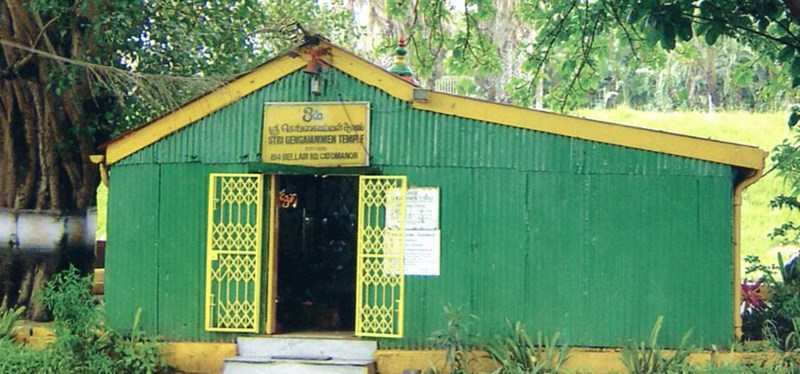
While the 103-year-old Shree Gengaiamman Temple is small in size, it has a massive following of devotees who attend the daily prayers and annual festivals.
The green temple is situated on Old Bellair Road (opposite the Nkosi Albert Luthuli Hospital) and is one of the oldest and most recognised temples in the country. The temple was built by South Africa’s pioneer Indians and is particularly interesting because it is an unpretentious structure built around a sacred anthill, which is the main focus of worship.
The temple’s history began with Thambooran Gounden, who was 16-years-old when he arrived from India in 1879. He lived and worked as a labourer in the Cato Manor area. It was 10 years after his arrival and him setting up home in the area that he noticed a mound similar to an anthill starting to materialise. The growth of the ‘puthu’ became a sacred spot in the settlement and a simple shelter was erected for the village deity. He built a temporary shelter out of bamboo around the growing puthu. It was 20 years later, in 1909, an iron and wood structure was used to replace the bamboo dwelling, and the ‘arasamaram’ and ‘aalamaram’ trees, which are of special significance in the worship of the mother goddesses, were planted on either side of the temple.

The first priest of the temple was Poojali Moonsamy Govender. According to documented records, the temple’s first constitution was signed by the late Gounden in October 1938 and the first committee was formed in 1940. Through the efforts of the first committee, the temple prospered over the years and gained countrywide recognition for its conservation. The temple was subsequently awarded a Conservation Award in 1986 by the Durban City Council because of the age of the temple and the fact that it was in its original state, form, and structure.
During the apartheid era, the group areas act gave rise to the mass removal of people out of Cato Manor and they were moved into surrounding areas. Although the devotees were moved to places that were far away from the temple, they still continued to come to the temple to offer their prayer and to make sure it was well maintained.
Today, the temple is home to worship of thousands of devotees. The annual Garagam Festival , the garagam which symbolizes mother Mariammans crown, and is carried honouring her as queen of the universe, is one of the temple’s prominent festivals. The event welcomes a crowd of more than 5000 people, and is celebrated on Mother’s Day every year.

Chairman of the temple, Mr D Pillay, said, “Our forefathers were faced with many challenges, hence, against this backdrop, the temple became a significant organisation. Our temple stands as a beacon of hope to thousands of devotees who congregate on a yearly basis to offer worship and prayer, and receive the blessings of our Divine Mother. Over the years, the popularity and power of the temple has expanded beyond South Africa’s boundaries. International devotees participate regularly in prayers at the temple. It is my fervent prayer that the heritage passed on to us, will be treasured and sustained, and that the Shree Gengaiamman Temple will continue to play a pivotal role in the lives of the hindu communities of South Africa.”