eThekwini adopts R75, 3 billion budget with lower tariff hikes and infrastructure focus
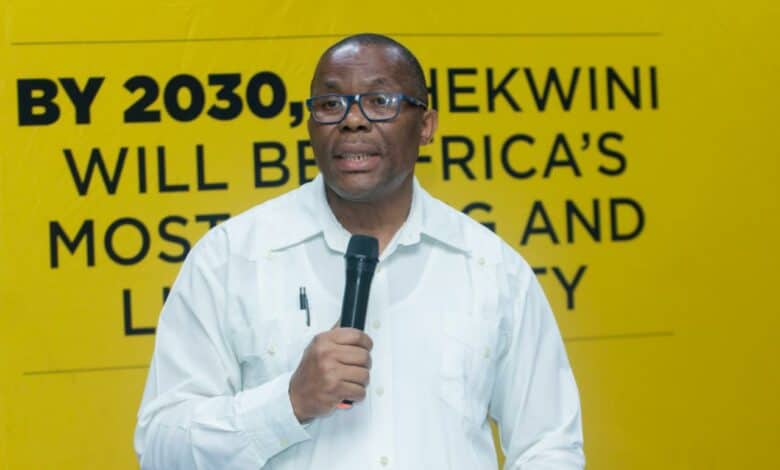
Addressing council, eThekwini mayor, Cyril Xaba said the budget was designed to balance service delivery needs with financial sustainability.
The eThekwini Municipality has adopted a R75, 3 billion budget for the 2026/2027 financial year, with city officials promising improved service delivery, infrastructure upgrades and reduced tariff increases aimed at easing pressure on residents and businesses.
The budget, officially adopted by council on May 29 as part of the Municipality’s Medium Term Revenue and Expenditure Framework (MTREF), comprises an operating budget of approximately R69 billion and a capital budget of R6, 3 billion.
Addressing council, eThekwini mayor, Cyril Xaba said the budget was designed to balance service delivery needs with financial sustainability.
“The 2026/27 budget is not an aspirational document. It is a funded, credible, and sustainable plan assessed as such by National Treasury. It prioritises the acceleration of repairs, the upgrading of bulk infrastructure, and the full implementation of our trading services turnaround strategies,” he said.
ALSO READ: Furious residents flood Durban CBD in protest against eThekwini tariff hikes
Following public consultations and engagements with stakeholders, council approved revised tariff increases lower than those initially proposed. Domestic water tariff increases were reduced from 15 percent to 12 percent, while sanitation increases dropped from 13 percent to eight percent. Property rate increases were reduced from an average of five percent to two percent, refuse removal tariffs from 13 percent to 9, 5 percent, and electricity tariff increases from 10, 5 percent to nine percent.
“As a caring city, we certainly hope that this brings some relief to our ratepayers and consumers,” said Xaba.
The budget process included 12 public hearings held between April and May, with residents, businesses, disability organisations and ratepayer associations providing input.
Council also approved amendments to its indigent support policy, increasing the threshold for exemption from property rates for indigent households from R350, 000 to R400, 000. Pensioner rebate qualification thresholds were also increased from R2, 5 million to R2, 75 million.
The municipality said key spending priorities include upgrading ageing infrastructure, improving water, sanitation and electricity reliability, and accelerating spatial transformation initiatives.
Alongside the budget, council adopted the municipality’s 2026/2027 Integrated Development Plan (IDP), outlining priorities such as job creation, housing delivery, township economic development and infrastructure investment.
Council also approved an additional R27 million allocation to complete the Old North Coast Road upgrade and widening project, currently about 90% complete, while backing plans to pursue national funding for new regional wastewater treatment works in Umdloti and Umkomaas.
Further approvals included the reallocation of R104, 6 million within the Energy Management Directorate to accelerate electricity infrastructure projects and the appointment of new non-executive directors to the boards of uShaka Marine World and the Durban International Convention Centre.
“The main focus of the budget is to ensure efficient and effective service delivery to our residents in order to uplift their quality of life,” concluded Mayor Xaba.